

In the realms of property development, you've probably come across the terms "storey" and "level" when describing a building. They're often used interchangeably in everyday conversation.
You might even think they're the same thing - except they're not. While both words refer to vertical divisions in a building, they are not synonymous. And knowing the difference can be very important when it comes to squeezing some extra space into your development.
Let's delve into the meaning, usage, and implications of storeys versus levels.
First up, I want to be clear about one thing - I am talking in generalities here. I will also be sticking to the most common interpretation of these terms and the ways they're mostly used. But with so many local councils around Australia having their own rules, make sure you check your council's own meanings. There are definitely a few that don't follow the herd!
Definitions
A storey refers to a complete floor of a building that is typically habitable or occupiable. It includes the space between one floor and the next. For example, a house with a ground floor, a first floor, and a second floor has three storeys.
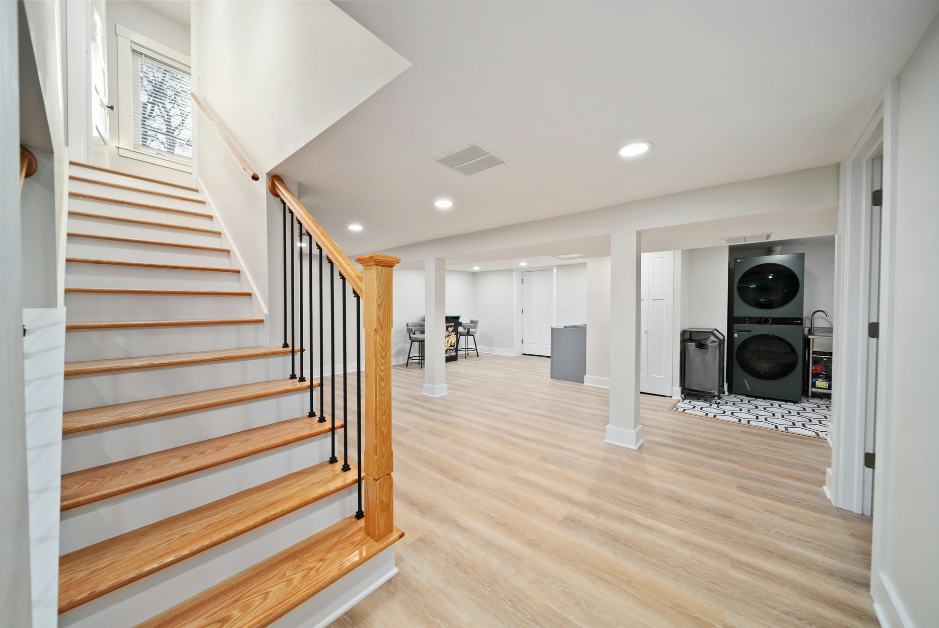 A level refers to a specific height or vertical position within a building. It's a more flexible term that can include spaces less than a full floor, or spaces that are non-habitable. Some examples include:
Not all levels are considered storeys. For example, a mezzanine (an intermediate level between two main floors) is a level, but not typically counted as a storey unless it meets specific requirements set by local building codes. For example, a five-storey office building may have:
Now you understand the difference, that's the end of this Property Pulse. Only kidding! Knowing how to apply this to development plans and use the difference to your advantage is the next step.
Natural Ground Level
The next piece of the puzzle you need to understand is natural ground level.
Natural Ground Level (NGL) is defined as the undisturbed level of land as it exists before development. It represents the terrain's natural slope and elevation, which can vary significantly across a site.
For example, if you're building on a hillside, the NGL might differ at the front and rear of the property. Measuring NGL allows designers and planners to evaluate how a proposed building will sit within the landscape, how much it will rise above or cut into the land, and what kind of earthworks might be required.
So why does it matter? Many councils impose building height limits based on NGL. For example, a home may be allowed to extend no more than 9 meters above natural ground level. This prevents developers from raising the land artificially to increase building height.
To create level building platforms on sloping sites, construction teams often need to cut (remove soil) or fill (add soil). The volume of earthworks is measured relative to the NGL. Excessive cut and fill may be discouraged or require additional engineering due to stability and drainage concerns.
Natural slopes can also influence stormwater drainage. Building designs that ignore NGL may lead to poor drainage, water pooling, or erosion. Understanding the land’s natural flow helps in designing effective retaining walls, swales, and stormwater management systems.
 How Does This Affect Your Development Plans?
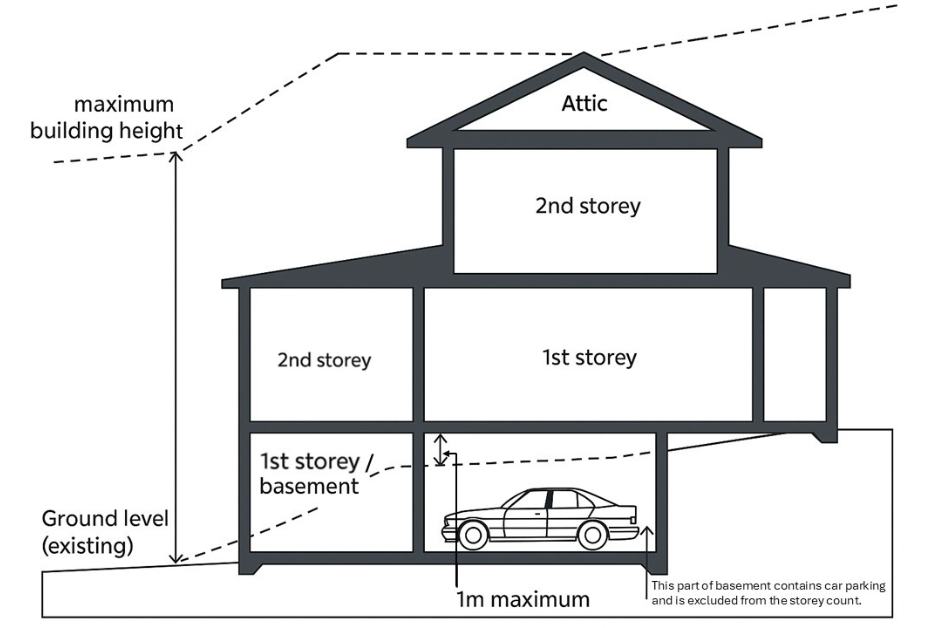
Basements, sub-basements, and underground parking levels are typically referred to as levels, especially when they're not used as primary living or working spaces.
For example, a building might be described as “five storeys above ground with three basement levels.” Here, levels denote the existence of floors, but storeys are reserved for the above-ground, habitable sections.
This is critical in urban planning where building height restrictions may apply only to above-ground storeys, while underground levels are excluded from that count.
And that's where you may be able to use this to your advantage - and also where you really need to study your local Council's rules.
If you have a sloping site, where you potentially need to cut into a hill for the lower level, there's a possibility that you may be able to create a level that's below the natural ground level, while still being able to build to the full height above.
To put this into practical terms, you could dig back into the hill and create a basement level and still have a 2-storey house above it, rather than just building a 2-storey house on top of the hill.
As a developer, this gives you lots more options. You might not even need to excavate below ground level all the way back into the hill, which could get very expensive. But you could at least go back far enough for a garage or even just a small home gym and storage area. The possibilities are only limited by your own imagination!
In the end, it comes down to what the market wants, how the council's rules are framed, and how much it's going to cost to do the extra work of creating an extra level. Now that you understand the lingo of storeys vs levels, along with the definition of natural ground level, keep your eyes open for potential development sites where you might be able to use the difference to your advantage.
You might even think they're the same thing - except they're not. While both words refer to vertical divisions in a building, they are not synonymous. And knowing the difference can be very important when it comes to squeezing some extra space into your development.
Let's delve into the meaning, usage, and implications of storeys versus levels.
First up, I want to be clear about one thing - I am talking in generalities here. I will also be sticking to the most common interpretation of these terms and the ways they're mostly used. But with so many local councils around Australia having their own rules, make sure you check your council's own meanings. There are definitely a few that don't follow the herd!
Definitions
A storey refers to a complete floor of a building that is typically habitable or occupiable. It includes the space between one floor and the next. For example, a house with a ground floor, a first floor, and a second floor has three storeys.
A level refers to a specific height or vertical position within a building. It's a more flexible term that can include spaces less than a full floor, or spaces that are non-habitable. Some examples include:- Basements
- Mezzanines
- Raised platforms
- Split-level interiors
- Rooftop terraces
Not all levels are considered storeys. For example, a mezzanine (an intermediate level between two main floors) is a level, but not typically counted as a storey unless it meets specific requirements set by local building codes. For example, a five-storey office building may have:
- 5 storeys (main floors)
- 7 levels (including two basement parking levels)
Now you understand the difference, that's the end of this Property Pulse. Only kidding! Knowing how to apply this to development plans and use the difference to your advantage is the next step.
Natural Ground Level
The next piece of the puzzle you need to understand is natural ground level.
Natural Ground Level (NGL) is defined as the undisturbed level of land as it exists before development. It represents the terrain's natural slope and elevation, which can vary significantly across a site.
For example, if you're building on a hillside, the NGL might differ at the front and rear of the property. Measuring NGL allows designers and planners to evaluate how a proposed building will sit within the landscape, how much it will rise above or cut into the land, and what kind of earthworks might be required.
So why does it matter? Many councils impose building height limits based on NGL. For example, a home may be allowed to extend no more than 9 meters above natural ground level. This prevents developers from raising the land artificially to increase building height.
To create level building platforms on sloping sites, construction teams often need to cut (remove soil) or fill (add soil). The volume of earthworks is measured relative to the NGL. Excessive cut and fill may be discouraged or require additional engineering due to stability and drainage concerns.
Natural slopes can also influence stormwater drainage. Building designs that ignore NGL may lead to poor drainage, water pooling, or erosion. Understanding the land’s natural flow helps in designing effective retaining walls, swales, and stormwater management systems.
How Does This Affect Your Development Plans?Basements, sub-basements, and underground parking levels are typically referred to as levels, especially when they're not used as primary living or working spaces.
For example, a building might be described as “five storeys above ground with three basement levels.” Here, levels denote the existence of floors, but storeys are reserved for the above-ground, habitable sections.
This is critical in urban planning where building height restrictions may apply only to above-ground storeys, while underground levels are excluded from that count.
And that's where you may be able to use this to your advantage - and also where you really need to study your local Council's rules.
If you have a sloping site, where you potentially need to cut into a hill for the lower level, there's a possibility that you may be able to create a level that's below the natural ground level, while still being able to build to the full height above.
To put this into practical terms, you could dig back into the hill and create a basement level and still have a 2-storey house above it, rather than just building a 2-storey house on top of the hill.
As a developer, this gives you lots more options. You might not even need to excavate below ground level all the way back into the hill, which could get very expensive. But you could at least go back far enough for a garage or even just a small home gym and storage area. The possibilities are only limited by your own imagination!
In the end, it comes down to what the market wants, how the council's rules are framed, and how much it's going to cost to do the extra work of creating an extra level. Now that you understand the lingo of storeys vs levels, along with the definition of natural ground level, keep your eyes open for potential development sites where you might be able to use the difference to your advantage.