

In case you hadn't noticed, it rains in Australia. And sometimes it rains a lot. As a property developer, dealing with stormwater is an important part of every project.
Property development inevitably changes the way stormwater behaves. As natural ground is replaced by roofs, roads and other hard surfaces, rainfall that once soaked into the soil now runs quickly across impermeable areas and into the stormwater system. This can overwhelm pipes, cause flooding, erode waterways and increase pollutant loads
Let's take a deep dive into three of the most common solutions: detention tanks, retention tanks and bio-detention basins.
Given the increase in stormwater caused by property development, it makes sense that councils across Australia require developments to include measures that control, slow or treat stormwater before it enters public infrastructure.
I've already dived into stormwater basics in the article Learning the Lingo: Legal Point of Discharge (LPOD). This time around I'm looking at how developers deal with stormwater onsite.
Three common systems used in residential and commercial projects are detention basins, retention tanks and bio-detention basins. Although these terms sound similar, they serve very different purposes. Understanding the distinctions between them is essential for developers who want to design effective, compliant and cost-efficient drainage solutions.
Detention Basins
A detention basin is one of the most straightforward and widely recognised forms of stormwater control. It is an open, shallow, landscaped depression designed to temporarily hold water during a storm. When rainfall is heavy, runoff flows into the basin and is stored until the peak passes. Water is then slowly released through a controlled outlet so that downstream systems are not overwhelmed.
Between storms, the basin remains dry and can often be used as open space, parkland or recreational area. Detention basins are commonly used in greenfield subdivisions and large developments where there is sufficient land to allocate to above-ground stormwater infrastructure.
The advantages of detention basins are cost and simplicity. They rely mostly on shaping the land, rather than installing complex structures. Maintenance is usually limited to mowing, debris removal and occasional sediment clearing. However, they require a significant land footprint. For medium-density housing, townhouse sites or urban infill projects, giving up large usable areas is often not feasible.
They also need to be carefully designed to avoid safety issues, mosquito breeding during prolonged wet weather or unattractive waterlogging.
Detention Tanks
Detention tanks perform the same basic function as basins but in an entirely different form. Instead of being open and above ground, detention tanks are enclosed structures - often made from concrete, plastic or modular detention cells - installed below ground to hold stormwater temporarily.
During peak rainfall the tank fills and temporarily stores water. A controlled outlet restricts the discharge rate, mimicking the same “slow release” behaviour as an above-ground basin. Once the storm ends, the tank drains and returns to an empty state.
Because tanks sit underground, they are invaluable in urban or constrained developments where surface land cannot be sacrificed. Builders frequently place them under driveways, carparks or landscaped areas, effectively utilising space that would otherwise be unavailable for stormwater management.
The trade-off, however, is cost and maintenance. Tanks require more structural materials, installation expertise and access provisions for future cleaning, all of which increase upfront costs.
Retention Tank
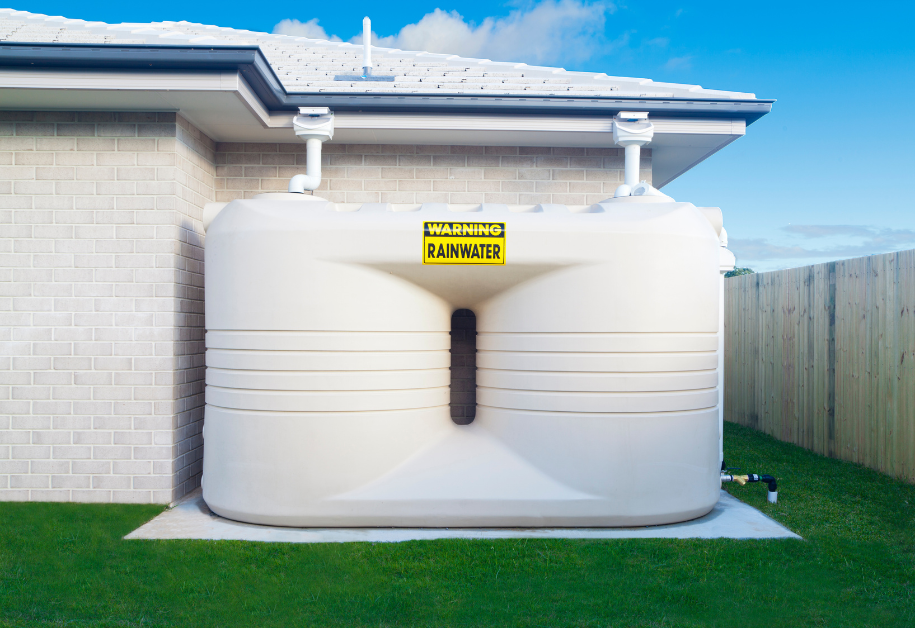
Retention tanks are very different because they store water permanently. Instead of draining dry between storms, a retention tank holds water continuously for reuse. This water can be used for irrigation, toilet flushing, garden watering or firefighting reserves. Only excess water from large storm events flows out to the drainage network.
These tanks are enclosed structures made from concrete, polyethylene or modular plastic cells. They can be installed above ground or below ground, depending on the layout of the development. Retention tanks help reduce mains water consumption, lower water bills and support sustainability goals.
The limitation of a retention tank is that it doesn’t reduce peak stormwater flows unless it has a detention component built in. A pure retention tank, once full, will overflow at the same rate as any other stormwater outlet during a storm unless extra capacity or a controlled outlet is included. Retention tanks also require regular maintenance to ensure pumps, filters, mosquito-proof screens and inlets remain functional.
Bio-Detention Basin
Bio-detention basins, sometimes referred to as bio-retention systems or rain gardens, serve a different purpose again. While detention basins focus on peak flow reduction and retention tanks focus on water storage, bio-detention basins focus on water quality improvements.
A bio-detention basin is a vegetated landscape feature that filters stormwater through layers of engineered soil, mulch and specific plants. When runoff enters the system, it ponds briefly on the surface. From there, it slowly filters through the soil media. Sediments are trapped, nutrients are absorbed by vegetation, and pollutants are broken down naturally. Cleaned water is then collected through an underground drainage layer and discharged safely to the stormwater network.
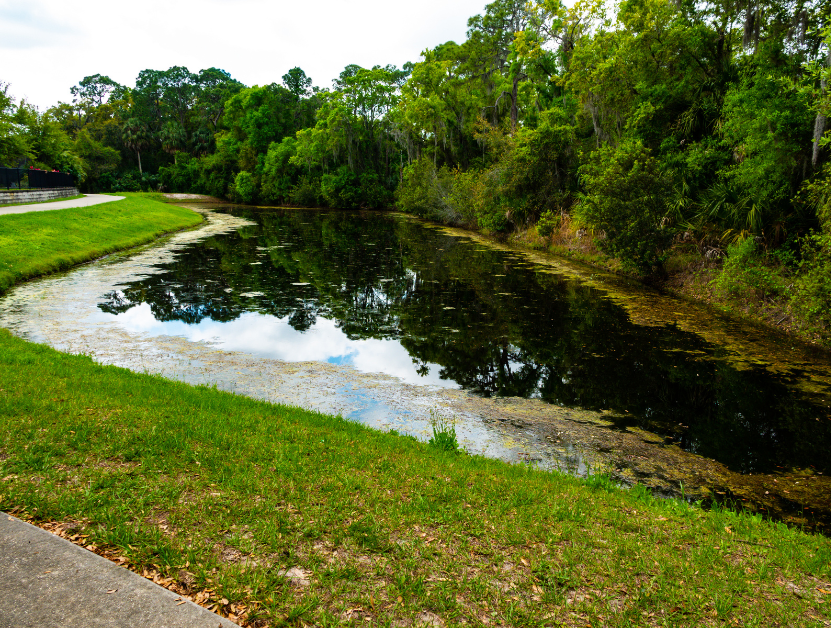
Bio-detention basins are widely used in sensitive areas, particularly developments near creeks, rivers, wetlands or environmentally sensitive areas. They can be incorporated into streetscapes, medians, garden beds or communal landscape areas.
Beyond their functional purpose, bio-detention basins offer aesthetic benefits. They introduce greenery, support biodiversity and can significantly improve the look and feel of a site.
Bio-detention systems, however, need specialised design. Their soil media must meet strict standards. Plants must be selected for their ability to tolerate both wet and dry conditions. Maintenance is ongoing and includes mulching, weeding, sediment removal and occasional replanting.
Summary
Each of the three systems plays a distinct role. Detention basins reduce peak flows and protect downstream infrastructure. Retention tanks store water for beneficial use and reduce reliance on mains supply. Bio-detention basins filter and treat stormwater to improve environmental outcomes.
In many developments, these systems are used together rather than individually. For instance, a project may incorporate a retention tank to store roof water for irrigation, a small detention component within the same tank to meet flow-rate requirements, and a bio-detention basin to treat runoff from roads and hard surfaces.
Councils increasingly expect an integrated approach, particularly in areas prone to flooding or located near sensitive natural environments.
Choosing the right stormwater system depends on several factors, including site size, topography, rainfall intensity, soil conditions, development density, council policies and available land. Large greenfield sites typically have enough space for above-ground detention basins, whereas urban infill sites or townhouse projects may rely more heavily on underground retention tanks or combined retention-detention systems hidden beneath driveways or landscaped areas.
Another factor to keep in mind is some of these solutions require a mechanical pump as part of the system. In a large development where there's a body or owner's corporation, councils can feel confident the pumps will be maintained regularly and replaced if required. In a small development that might not be the case, so councils aren't as keen.
Either way, early consultation with a civil engineer is essential. Selecting the wrong system, or sizing it incorrectly, can lead to expensive redesigns, DA delays or non-compliance during construction. Effective stormwater planning ensures that developments remain functional, attractive and compliant long after completion.
The bottom line is that when applied appropriately, these systems work together to mimic natural rain processes as closely as possible in the built environment. They reduce runoff impacts, protect waterways, conserve water, and support liveable, environmentally conscious communities. With thoughtful planning and expert design, developers can meet regulatory requirements while also enhancing the long-term liveability and performance of their projects.
Property development inevitably changes the way stormwater behaves. As natural ground is replaced by roofs, roads and other hard surfaces, rainfall that once soaked into the soil now runs quickly across impermeable areas and into the stormwater system. This can overwhelm pipes, cause flooding, erode waterways and increase pollutant loads
Let's take a deep dive into three of the most common solutions: detention tanks, retention tanks and bio-detention basins.
Given the increase in stormwater caused by property development, it makes sense that councils across Australia require developments to include measures that control, slow or treat stormwater before it enters public infrastructure.
I've already dived into stormwater basics in the article Learning the Lingo: Legal Point of Discharge (LPOD). This time around I'm looking at how developers deal with stormwater onsite.
Three common systems used in residential and commercial projects are detention basins, retention tanks and bio-detention basins. Although these terms sound similar, they serve very different purposes. Understanding the distinctions between them is essential for developers who want to design effective, compliant and cost-efficient drainage solutions.
Detention Basins
A detention basin is one of the most straightforward and widely recognised forms of stormwater control. It is an open, shallow, landscaped depression designed to temporarily hold water during a storm. When rainfall is heavy, runoff flows into the basin and is stored until the peak passes. Water is then slowly released through a controlled outlet so that downstream systems are not overwhelmed.
Between storms, the basin remains dry and can often be used as open space, parkland or recreational area. Detention basins are commonly used in greenfield subdivisions and large developments where there is sufficient land to allocate to above-ground stormwater infrastructure.
The advantages of detention basins are cost and simplicity. They rely mostly on shaping the land, rather than installing complex structures. Maintenance is usually limited to mowing, debris removal and occasional sediment clearing. However, they require a significant land footprint. For medium-density housing, townhouse sites or urban infill projects, giving up large usable areas is often not feasible.
They also need to be carefully designed to avoid safety issues, mosquito breeding during prolonged wet weather or unattractive waterlogging.
Detention Tanks
Detention tanks perform the same basic function as basins but in an entirely different form. Instead of being open and above ground, detention tanks are enclosed structures - often made from concrete, plastic or modular detention cells - installed below ground to hold stormwater temporarily.
During peak rainfall the tank fills and temporarily stores water. A controlled outlet restricts the discharge rate, mimicking the same “slow release” behaviour as an above-ground basin. Once the storm ends, the tank drains and returns to an empty state.
Because tanks sit underground, they are invaluable in urban or constrained developments where surface land cannot be sacrificed. Builders frequently place them under driveways, carparks or landscaped areas, effectively utilising space that would otherwise be unavailable for stormwater management.
The trade-off, however, is cost and maintenance. Tanks require more structural materials, installation expertise and access provisions for future cleaning, all of which increase upfront costs.
Retention Tank
Retention tanks are very different because they store water permanently. Instead of draining dry between storms, a retention tank holds water continuously for reuse. This water can be used for irrigation, toilet flushing, garden watering or firefighting reserves. Only excess water from large storm events flows out to the drainage network.
These tanks are enclosed structures made from concrete, polyethylene or modular plastic cells. They can be installed above ground or below ground, depending on the layout of the development. Retention tanks help reduce mains water consumption, lower water bills and support sustainability goals.
The limitation of a retention tank is that it doesn’t reduce peak stormwater flows unless it has a detention component built in. A pure retention tank, once full, will overflow at the same rate as any other stormwater outlet during a storm unless extra capacity or a controlled outlet is included. Retention tanks also require regular maintenance to ensure pumps, filters, mosquito-proof screens and inlets remain functional.
Bio-Detention Basin
Bio-detention basins, sometimes referred to as bio-retention systems or rain gardens, serve a different purpose again. While detention basins focus on peak flow reduction and retention tanks focus on water storage, bio-detention basins focus on water quality improvements.
A bio-detention basin is a vegetated landscape feature that filters stormwater through layers of engineered soil, mulch and specific plants. When runoff enters the system, it ponds briefly on the surface. From there, it slowly filters through the soil media. Sediments are trapped, nutrients are absorbed by vegetation, and pollutants are broken down naturally. Cleaned water is then collected through an underground drainage layer and discharged safely to the stormwater network.
Bio-detention basins are widely used in sensitive areas, particularly developments near creeks, rivers, wetlands or environmentally sensitive areas. They can be incorporated into streetscapes, medians, garden beds or communal landscape areas.
Beyond their functional purpose, bio-detention basins offer aesthetic benefits. They introduce greenery, support biodiversity and can significantly improve the look and feel of a site.
Bio-detention systems, however, need specialised design. Their soil media must meet strict standards. Plants must be selected for their ability to tolerate both wet and dry conditions. Maintenance is ongoing and includes mulching, weeding, sediment removal and occasional replanting.
Summary
Each of the three systems plays a distinct role. Detention basins reduce peak flows and protect downstream infrastructure. Retention tanks store water for beneficial use and reduce reliance on mains supply. Bio-detention basins filter and treat stormwater to improve environmental outcomes.
In many developments, these systems are used together rather than individually. For instance, a project may incorporate a retention tank to store roof water for irrigation, a small detention component within the same tank to meet flow-rate requirements, and a bio-detention basin to treat runoff from roads and hard surfaces.
Councils increasingly expect an integrated approach, particularly in areas prone to flooding or located near sensitive natural environments.
Choosing the right stormwater system depends on several factors, including site size, topography, rainfall intensity, soil conditions, development density, council policies and available land. Large greenfield sites typically have enough space for above-ground detention basins, whereas urban infill sites or townhouse projects may rely more heavily on underground retention tanks or combined retention-detention systems hidden beneath driveways or landscaped areas.
Another factor to keep in mind is some of these solutions require a mechanical pump as part of the system. In a large development where there's a body or owner's corporation, councils can feel confident the pumps will be maintained regularly and replaced if required. In a small development that might not be the case, so councils aren't as keen.
Either way, early consultation with a civil engineer is essential. Selecting the wrong system, or sizing it incorrectly, can lead to expensive redesigns, DA delays or non-compliance during construction. Effective stormwater planning ensures that developments remain functional, attractive and compliant long after completion.
The bottom line is that when applied appropriately, these systems work together to mimic natural rain processes as closely as possible in the built environment. They reduce runoff impacts, protect waterways, conserve water, and support liveable, environmentally conscious communities. With thoughtful planning and expert design, developers can meet regulatory requirements while also enhancing the long-term liveability and performance of their projects.