

In case you haven't noticed already, I'm a huge fan of prefab construction. For property developers, the question isn’t whether prefab will gain a foothold, it’s about when and how, and what needs to happen for the industry to take off.
Construction costs are a big part of any property development (along with taxes - don't get me started!!). Prefab construction has long been positioned as the next big shift in how we build, being faster, smarter, and more cost-controlled.
The idea is compelling: streamlined manufacturing, reduced waste, fewer site delays, and scalable efficiency. Yet despite all that potential, prefab still sits on the edge of mainstream adoption in Australia, not gaining traction.
Let me start at the beginning, by answering the obvious question:
What Is Prefab Construction?
Prefab (or prefabricated) construction refers to the process of manufacturing key building components such as walls, floors, modules, or even entire rooms, off-site in a controlled factory environment, then transporting and assembling them on-site. It’s a shift from the traditional "build everything on site" approach to one that’s planned, engineered, and assembled like a supply chain.
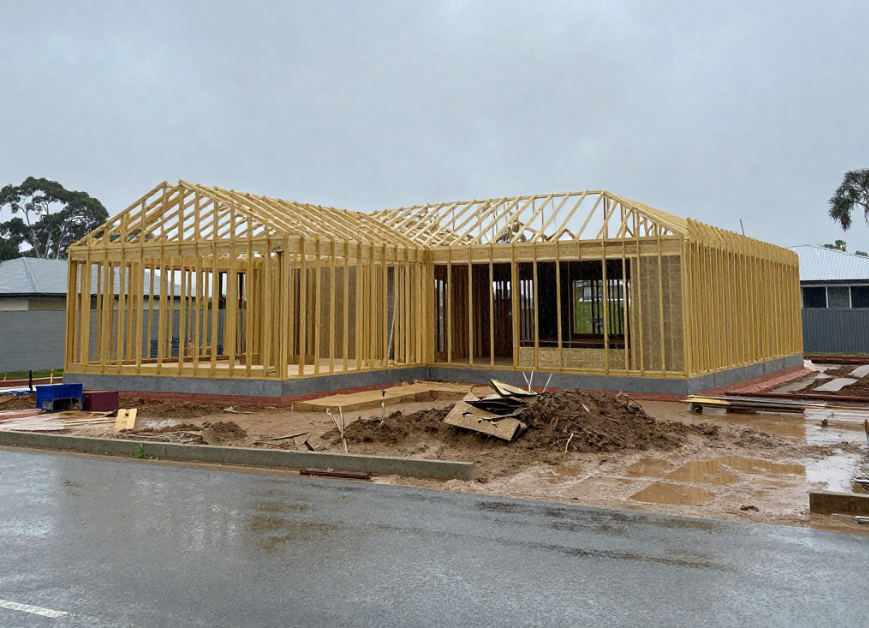 Rather than dealing with variable site conditions, weather, and multiple subcontractors working sequentially, prefab allows developers to run design, manufacturing, and site preparation in parallel, dramatically reducing timelines and waste.
Modern prefab isn’t about flat-pack or low-quality construction, it’s about precision, repeatability, and scalability. For property developers, it represents a move toward industrialised building, where efficiency and quality are engineered into the process from day one.
Okay, now we're on the same page about what prefab construction is, let's take a look at some things we can do, as property developers, to help it take off in the Australian construction space.
A Shift In Mindset
The first hurdle is perception. Prefab is often seen as a compromise, a "budget" or "temporary" build method, rather than a high-quality, scalable solution. For example, there's plenty of Melbourne suburbs with hideous old concrete box commission housing to reinforce that stereotype.
Additionally, many developers still equate traditional construction with control and craftsmanship, while associating prefab with risk or aesthetic limitation.
That needs to change. Prefab is not a downgrade; it’s a re-engineering of process. Developers who can see beyond the stigma will be first to capitalise on its efficiencies.
Changing the mindset starts with reframing prefab as a procurement model, not a product. It’s about shifting some construction stages upstream into a controlled environment, where time, quality, and cost can be tightly managed. Once developers start treating prefab as a design-and-delivery strategy, not a novelty, it becomes part of a smarter business model.
So where do you start?
 Designing For Prefab From Day One
Prefab fails when it’s treated as a bolt-on solution to a traditional build. It succeeds when it’s integrated from the start.
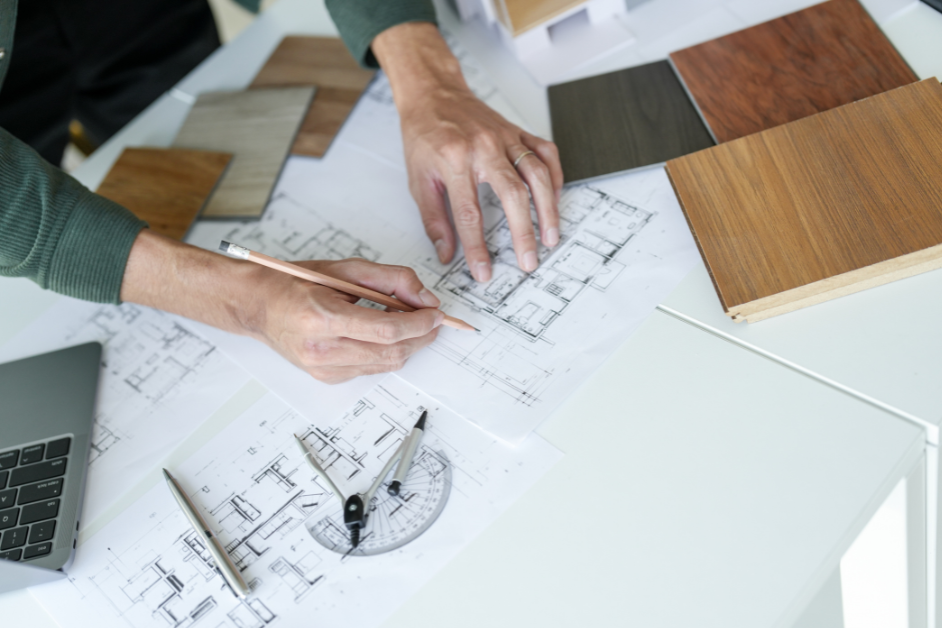
Developers and architects need to work together early to ensure designs are modular, repeatable, and factory-friendly. This is known as DfMA - Designing for Manufactured Assembly.
Small adjustments in design, such as wall dimensions, service layouts and material selection, can make or break a prefab workflow.
Early collaboration with manufacturers is critical. Instead of handing over a completed set of plans and asking for a prefab quote, developers should bring suppliers into the design phase. This integrated design process allows the build to be optimised for factory production, transport, and installation.
The payoff? Fewer site surprises, cleaner project timelines, and significantly lower exposure to cost overruns.
And take note of this critical point - just because you design for manufactured assembly, doesn't mean you have to build that way. Those designs can still be built in traditional methods.
The key takeaway here is if you design that way, you have a choice how to build it. The more designs there are that suit prefab, the easier it will be to convince builders to use it. And the more we ask for it as property developers, the more architects and designers will start to incorporate it automatically.
Building the Right Industry Partnerships
Prefab construction doesn’t succeed in isolation. It requires a network of aligned players such as developers, manufacturers, engineers, transporters and certifiers, who understand how to work together within a compressed delivery cycle.
For developers, that means selecting partners based on capability and collaboration, not just price. You want a manufacturer who can deliver precision, consistency, and clear communication, not just low-cost modules.
At the same time, builders need to evolve from traditional site-based contractors into assembly specialists, professionals skilled in managing logistics, craning, and on-site integration. Prefab changes who does what, and developers must ensure everyone in the chain is working to the same playbook.
When these partnerships are built early, prefab projects move faster, smoother, and with less friction.
Volume
All of this contributes to building volume, which is what's needed to build the prefab industry.
Right now, one of the most practical barriers to prefab adoption is the lack of established, high-capacity local manufacturers. There are excellent operators in Australia, but capacity is limited, and demand remains inconsistent.
Developers can play an important role here. By designing for prefab and forming long-term supply partnerships, they can stabilise the pipeline and unlock economies of scale.
As an example, I'm currently working on a 17 townhouse project in Melbourne. For that project we have a couple of different bathroom designs, each of which is a DfMA module. All the townhouses use one or other of those modules, increasing volume and removing the need to build each one individually from scratch. The same applies to all the other areas in each townhouse.
That's great for a bigger project like mine, but what really needs to happen is those standard module designs being available on an industry-wide level. Then the person designing a townhouse can pick from the available modules and slot them together in their design.
Once we reach enough industry volume to have modular elements available to pick and choose "off the shelf" at the design stage, prefab will really come into its own as a construction solution.
 Streamlining Approvals and Compliance
You don't need me to tell you that the construction industry is highly regulated, which has also been a bottleneck for prefab. Planning frameworks, building codes and certification systems are designed around traditional construction; sequential, site-based, and locally verified. Prefab, by contrast, shifts much of the work off-site, often across state lines or even international borders.
Developers pushing into prefab need to work closely with certifiers and councils early to clarify compliance pathways. Off-site fabrication certificates, transport approvals and on-site assembly sign-offs all need to line up seamlessly.
Industry bodies and government agencies have a role to play too. Clearer national standards, streamlined certification, and cross-state recognition will help prefab scale beyond one-off pilot projects like mine.
It's going to take time for that framework to mature and we all need to keep asking for it. I'm certainly pushing state governments every chance I get!
The Bottom Line
Finally, the prefab industry needs visible success stories. Not just case studies, but proof at scale. My project will be one of these examples!
Industry change is driven by confidence. When investors, lenders, and insurers see that prefab can consistently deliver results, the capital will follow. That’s when prefab stops being a niche innovation and becomes a mainstream solution.
The reality is, prefab construction won’t just happen. It requires alignment across design, manufacturing, regulation, and finance, along with leadership from property developers and builders willing to pioneer a smarter way to build.
The opportunity is clear. The technology is ready. What’s needed now is momentum and developers willing to make prefab happen.
Construction costs are a big part of any property development (along with taxes - don't get me started!!). Prefab construction has long been positioned as the next big shift in how we build, being faster, smarter, and more cost-controlled.
The idea is compelling: streamlined manufacturing, reduced waste, fewer site delays, and scalable efficiency. Yet despite all that potential, prefab still sits on the edge of mainstream adoption in Australia, not gaining traction.
Let me start at the beginning, by answering the obvious question:
What Is Prefab Construction?
Prefab (or prefabricated) construction refers to the process of manufacturing key building components such as walls, floors, modules, or even entire rooms, off-site in a controlled factory environment, then transporting and assembling them on-site. It’s a shift from the traditional "build everything on site" approach to one that’s planned, engineered, and assembled like a supply chain.
Rather than dealing with variable site conditions, weather, and multiple subcontractors working sequentially, prefab allows developers to run design, manufacturing, and site preparation in parallel, dramatically reducing timelines and waste.Modern prefab isn’t about flat-pack or low-quality construction, it’s about precision, repeatability, and scalability. For property developers, it represents a move toward industrialised building, where efficiency and quality are engineered into the process from day one.
Okay, now we're on the same page about what prefab construction is, let's take a look at some things we can do, as property developers, to help it take off in the Australian construction space.
A Shift In Mindset
The first hurdle is perception. Prefab is often seen as a compromise, a "budget" or "temporary" build method, rather than a high-quality, scalable solution. For example, there's plenty of Melbourne suburbs with hideous old concrete box commission housing to reinforce that stereotype.
Additionally, many developers still equate traditional construction with control and craftsmanship, while associating prefab with risk or aesthetic limitation.
That needs to change. Prefab is not a downgrade; it’s a re-engineering of process. Developers who can see beyond the stigma will be first to capitalise on its efficiencies.
Changing the mindset starts with reframing prefab as a procurement model, not a product. It’s about shifting some construction stages upstream into a controlled environment, where time, quality, and cost can be tightly managed. Once developers start treating prefab as a design-and-delivery strategy, not a novelty, it becomes part of a smarter business model.
So where do you start?
Designing For Prefab From Day OnePrefab fails when it’s treated as a bolt-on solution to a traditional build. It succeeds when it’s integrated from the start.
Developers and architects need to work together early to ensure designs are modular, repeatable, and factory-friendly. This is known as DfMA - Designing for Manufactured Assembly.
Small adjustments in design, such as wall dimensions, service layouts and material selection, can make or break a prefab workflow.
Early collaboration with manufacturers is critical. Instead of handing over a completed set of plans and asking for a prefab quote, developers should bring suppliers into the design phase. This integrated design process allows the build to be optimised for factory production, transport, and installation.
The payoff? Fewer site surprises, cleaner project timelines, and significantly lower exposure to cost overruns.
And take note of this critical point - just because you design for manufactured assembly, doesn't mean you have to build that way. Those designs can still be built in traditional methods.
The key takeaway here is if you design that way, you have a choice how to build it. The more designs there are that suit prefab, the easier it will be to convince builders to use it. And the more we ask for it as property developers, the more architects and designers will start to incorporate it automatically.
Building the Right Industry Partnerships
Prefab construction doesn’t succeed in isolation. It requires a network of aligned players such as developers, manufacturers, engineers, transporters and certifiers, who understand how to work together within a compressed delivery cycle.
For developers, that means selecting partners based on capability and collaboration, not just price. You want a manufacturer who can deliver precision, consistency, and clear communication, not just low-cost modules.
At the same time, builders need to evolve from traditional site-based contractors into assembly specialists, professionals skilled in managing logistics, craning, and on-site integration. Prefab changes who does what, and developers must ensure everyone in the chain is working to the same playbook.
When these partnerships are built early, prefab projects move faster, smoother, and with less friction.
Volume
All of this contributes to building volume, which is what's needed to build the prefab industry.
Right now, one of the most practical barriers to prefab adoption is the lack of established, high-capacity local manufacturers. There are excellent operators in Australia, but capacity is limited, and demand remains inconsistent.
Developers can play an important role here. By designing for prefab and forming long-term supply partnerships, they can stabilise the pipeline and unlock economies of scale.
As an example, I'm currently working on a 17 townhouse project in Melbourne. For that project we have a couple of different bathroom designs, each of which is a DfMA module. All the townhouses use one or other of those modules, increasing volume and removing the need to build each one individually from scratch. The same applies to all the other areas in each townhouse.
That's great for a bigger project like mine, but what really needs to happen is those standard module designs being available on an industry-wide level. Then the person designing a townhouse can pick from the available modules and slot them together in their design.
Once we reach enough industry volume to have modular elements available to pick and choose "off the shelf" at the design stage, prefab will really come into its own as a construction solution.
Streamlining Approvals and ComplianceYou don't need me to tell you that the construction industry is highly regulated, which has also been a bottleneck for prefab. Planning frameworks, building codes and certification systems are designed around traditional construction; sequential, site-based, and locally verified. Prefab, by contrast, shifts much of the work off-site, often across state lines or even international borders.
Developers pushing into prefab need to work closely with certifiers and councils early to clarify compliance pathways. Off-site fabrication certificates, transport approvals and on-site assembly sign-offs all need to line up seamlessly.
Industry bodies and government agencies have a role to play too. Clearer national standards, streamlined certification, and cross-state recognition will help prefab scale beyond one-off pilot projects like mine.
It's going to take time for that framework to mature and we all need to keep asking for it. I'm certainly pushing state governments every chance I get!
The Bottom Line
Finally, the prefab industry needs visible success stories. Not just case studies, but proof at scale. My project will be one of these examples!
Industry change is driven by confidence. When investors, lenders, and insurers see that prefab can consistently deliver results, the capital will follow. That’s when prefab stops being a niche innovation and becomes a mainstream solution.
The reality is, prefab construction won’t just happen. It requires alignment across design, manufacturing, regulation, and finance, along with leadership from property developers and builders willing to pioneer a smarter way to build.
The opportunity is clear. The technology is ready. What’s needed now is momentum and developers willing to make prefab happen.