

At first glance, the two phrases "Time In The Market" and "Timing The Market" look so similar you'd think they mean the same thing. But if you're a Property Developer rather than a Property Investor (check out my previous article "Property Development: How To Succeed Without Really Trying" if you want to understand the difference) then you need to recognise the two phrases mean very different things.
When it comes to development, if you're following a good process, you're going to put a lot of effort into determining the numbers for your feasibility. You get estimates for various elements of the project, find out what interest rate your lender's going to charge, how much the product will sell for etc, and voila, you have a feasibility.
And if you're smart, you'll also stress test your feasibility, seeing what happens if costs rise or fall, resale prices of the end product change, interest rates rise, and so on. But very few people think about one of the project elements that can cause the biggest disruptions to your feasibility.
Time.
That's where the two phrases above really impact your development, although not in the same way. Let's start by taking a look at what they both mean.
Timing The Market
Timing the property market refers to the strategy of trying to predict the best time to buy or sell a property based on market trends, economic indicators, and other factors that may influence property prices.

Investors who employ this strategy believe they can buy properties at a low price and sell them at a higher price when the market is booming. Essentially, the goal is to maximise returns by buying low and selling high.
However, timing the property market can be challenging and risky. The real estate market is influenced by numerous factors, including economic conditions, interest rates, housing demand, supply and demand dynamics, government policies and geopolitical events.
Predicting all these variables accurately is nearly impossible, and attempting to time the market can lead to missed opportunities or even losses if the predictions turn out to be incorrect. I'm going to go out on a limb here and suggest that this type of "investing" is closer to speculation or gambling.
Property Investors who plan to hold their assets for a substantial period of time may do better if they time the market well, but realistically, if they hold through more than one cycle, it will likely be less of an issue. Still, it's going to take a lot longer to see growth if you buy at the peak of the market, so it's worth keeping that in mind.
For Property Developers, generally the idea is to be in the market for a shorter time frame, and add value through development. So in many ways timing the market is less important, as potentially you're selling into a market that's very similar to the one you bought in (at least for small projects!).
It's still the case that where the market is in terms of the property cycle can make a big difference to the viability of a project and the risk of resale prices having dropped by the time the project is completed. It's obvious that starting your project in the low end of a property cycle and selling the end product when the cycle is at the peak is far and away the best way to earn the most profit.
The fact that development adds value to the property regardless of the cycle, though, doesn't mean you should avoid developing most of the time. Instead you need to be very clear on your numbers going in, and if you think the market may drop, make sure the project still stacks up at that point.
Time In The Market
I've already touched on this above in relation to investors, but time in the market is an investment strategy that focuses on the long-term holding of properties. Investors who adopt this approach believe that it is better to stay invested in the real estate market over an extended period, allowing the value of the property to appreciate naturally and benefit from the passive income generated through rental properties.
The advantage of the time in the market strategy is that it reduces the impact of short-term market fluctuations and minimises the risk associated with trying to time the market. Real estate, historically, has generally shown appreciation over the long term, and holding onto properties for an extended period can lead to significant wealth accumulation.
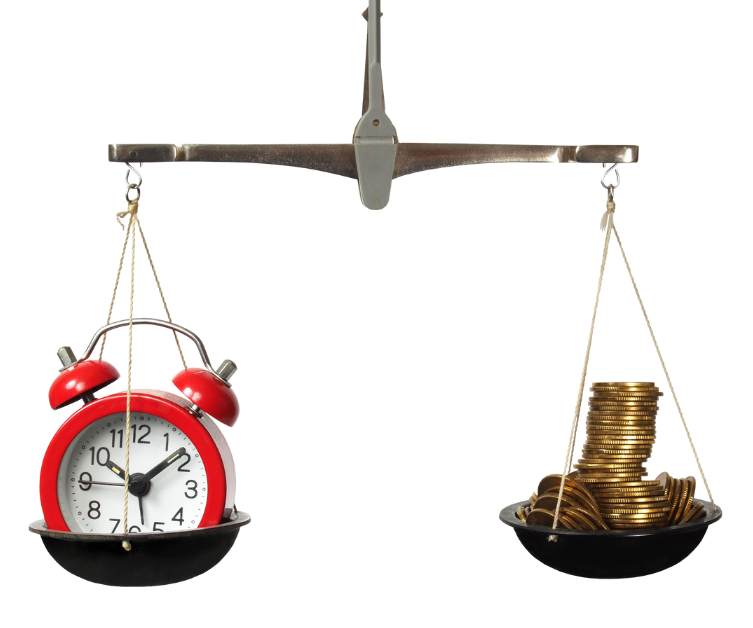 Property Developers, however, generally aren't interested in this approach unless they plan to hold stock from their developments. Instead, most developers want to get their projects completed as fast as they can, to minimise time in the market.
Which strategy is better depends on the individual's risk tolerance, investment goals, and expertise. Timing the market requires a lot of skill, research, and sometimes luck, whereas time in the market requires patience and a long-term perspective.
A very rule of thumb breakdown is that Property Investors definitely rely on Time In The Market to benefit them, and although Timing the Market requires more sophisticated market analysis and entails higher risks, it can greatly enhance the returns achieved.
Property Developers, on the other hand, need to be much more aware of Timing the Market. Success is much easier buying in a down market and selling into a booming market. And while success can also be achieved the other way around, a lot more emphasis needs to be put on making sure the numbers still stack up in that scenario.
Another factor to keep in mind, too, is that the average vendor is often well behind the eight ball when it comes to understanding where the market is at. Sometimes this works in your favour, for example when the vendor doesn't realise the market has turned and is starting to boom, and so will still accept a lower price.
This can also work the other way, where a vendor still thinks his property should fetch boom prices, when the boom has been and gone. You need to understand their mindset and it can actually work in your favour if you find a way to meet their price point by changing the terms of the deal.
Two final points. First, get into the habit of stress testing your feasibilities for time blowouts, as well as other issues. One thing the pandemic has shown us is how rapidly things can change without any warning, so having strong numbers and an adequate contingency allowance is vital.
And second, "Time spent with cats is never wasted. Colette" Courtesy of my cat Storm.
When it comes to development, if you're following a good process, you're going to put a lot of effort into determining the numbers for your feasibility. You get estimates for various elements of the project, find out what interest rate your lender's going to charge, how much the product will sell for etc, and voila, you have a feasibility.
And if you're smart, you'll also stress test your feasibility, seeing what happens if costs rise or fall, resale prices of the end product change, interest rates rise, and so on. But very few people think about one of the project elements that can cause the biggest disruptions to your feasibility.
Time.
That's where the two phrases above really impact your development, although not in the same way. Let's start by taking a look at what they both mean.
Timing The Market
Timing the property market refers to the strategy of trying to predict the best time to buy or sell a property based on market trends, economic indicators, and other factors that may influence property prices.
Investors who employ this strategy believe they can buy properties at a low price and sell them at a higher price when the market is booming. Essentially, the goal is to maximise returns by buying low and selling high.
However, timing the property market can be challenging and risky. The real estate market is influenced by numerous factors, including economic conditions, interest rates, housing demand, supply and demand dynamics, government policies and geopolitical events.
Predicting all these variables accurately is nearly impossible, and attempting to time the market can lead to missed opportunities or even losses if the predictions turn out to be incorrect. I'm going to go out on a limb here and suggest that this type of "investing" is closer to speculation or gambling.
Property Investors who plan to hold their assets for a substantial period of time may do better if they time the market well, but realistically, if they hold through more than one cycle, it will likely be less of an issue. Still, it's going to take a lot longer to see growth if you buy at the peak of the market, so it's worth keeping that in mind.
For Property Developers, generally the idea is to be in the market for a shorter time frame, and add value through development. So in many ways timing the market is less important, as potentially you're selling into a market that's very similar to the one you bought in (at least for small projects!).
It's still the case that where the market is in terms of the property cycle can make a big difference to the viability of a project and the risk of resale prices having dropped by the time the project is completed. It's obvious that starting your project in the low end of a property cycle and selling the end product when the cycle is at the peak is far and away the best way to earn the most profit.
The fact that development adds value to the property regardless of the cycle, though, doesn't mean you should avoid developing most of the time. Instead you need to be very clear on your numbers going in, and if you think the market may drop, make sure the project still stacks up at that point.
Time In The Market
I've already touched on this above in relation to investors, but time in the market is an investment strategy that focuses on the long-term holding of properties. Investors who adopt this approach believe that it is better to stay invested in the real estate market over an extended period, allowing the value of the property to appreciate naturally and benefit from the passive income generated through rental properties.
The advantage of the time in the market strategy is that it reduces the impact of short-term market fluctuations and minimises the risk associated with trying to time the market. Real estate, historically, has generally shown appreciation over the long term, and holding onto properties for an extended period can lead to significant wealth accumulation.
Property Developers, however, generally aren't interested in this approach unless they plan to hold stock from their developments. Instead, most developers want to get their projects completed as fast as they can, to minimise time in the market.Which strategy is better depends on the individual's risk tolerance, investment goals, and expertise. Timing the market requires a lot of skill, research, and sometimes luck, whereas time in the market requires patience and a long-term perspective.
A very rule of thumb breakdown is that Property Investors definitely rely on Time In The Market to benefit them, and although Timing the Market requires more sophisticated market analysis and entails higher risks, it can greatly enhance the returns achieved.
Property Developers, on the other hand, need to be much more aware of Timing the Market. Success is much easier buying in a down market and selling into a booming market. And while success can also be achieved the other way around, a lot more emphasis needs to be put on making sure the numbers still stack up in that scenario.
Another factor to keep in mind, too, is that the average vendor is often well behind the eight ball when it comes to understanding where the market is at. Sometimes this works in your favour, for example when the vendor doesn't realise the market has turned and is starting to boom, and so will still accept a lower price.
This can also work the other way, where a vendor still thinks his property should fetch boom prices, when the boom has been and gone. You need to understand their mindset and it can actually work in your favour if you find a way to meet their price point by changing the terms of the deal.
Two final points. First, get into the habit of stress testing your feasibilities for time blowouts, as well as other issues. One thing the pandemic has shown us is how rapidly things can change without any warning, so having strong numbers and an adequate contingency allowance is vital.
And second, "Time spent with cats is never wasted. Colette" Courtesy of my cat Storm.