

As you can imagine, I spend a lot of time looking at deals in detail with my students, as well as more general discussions chatting in the bar after meetups.
Much of that chatter focuses on the numbers of a deal, along with "deal breakers" to do with the site itself and the cost and/or difficulty of rectifying issues we identify.
But there's another concept I regularly bring up, Opportunity Cost, that leaves people blinking at me in complete confusion.
No idea what that means? Or have a vague idea but don't really understand it?
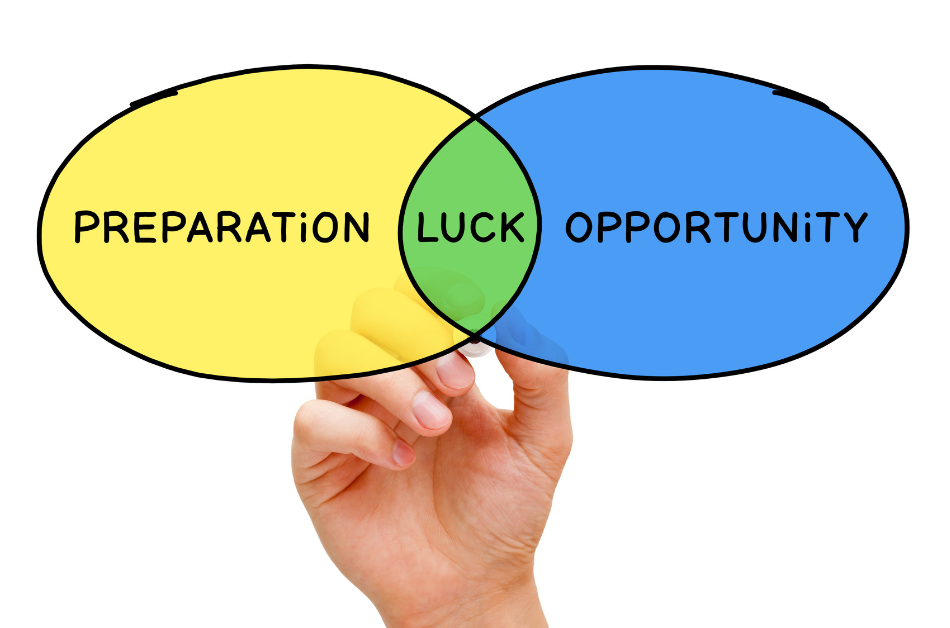 The best place to start is to look at what the word "opportunity" means. There's a formula I've seen many times, and I think it sums it up perfectly:
Luck + Preparation = Opportunity
On a side note, if you really want to tick me off, tell me you think I'm "lucky" to be in the position I'm in today. On second thoughts, please don't. I'm much nicer to talk to when I'm not ticked off!
As Property Developers, are there times when we happen to be in the right place at the right time? Sure. And I guess you could call that luck. Sometimes it probably is.
But was it luck that door knocked 100 houses and found a great deal? Was it luck that took an agent out for coffee once a month for a year before they handed you an off market deal on a plate?
No. That's called putting in the work. Essentially, doing what you need to do so that when luck comes knocking, you've already got your door open, beckoning it in.
There's also the second part of the equation - preparation. It doesn't matter how much "luck" comes your way, if you're not ready to take advantage of it, it's going to continue walking right past your door.
Being prepared can take many forms, but a few off the the top of my head include:
Add together a smidge of luck and a whole lot of preparation, and suddenly opportunities appear and you are able to take advantage of them.
So now you understand how opportunity works, what is Opportunity Cost? Well, it falls on the preparation side of things. It means that if you take on opportunity A, you won't be in a position to take on opportunity B.
Confused? As an example, say you have enough money to pay the deposit on one property. If you use that money to purchase opportunity A, there's nothing left to purchase opportunity B. So taking up opportunity A has COST you the opportunity to do opportunity B. That's Opportunity Cost.
"But Rob," I hear you asking, logic circuits on overdrive, "any time you put money into a deal you can't use it for another one, so doesn't that mean every opportunity has a cost, in which case what's the point of raising it as an issue in the first place?"
 Good question. While at one level that's true, the point is that some deals come with more of a cost than others, but not necessarily in terms of money.
Take a deal I was looking at with a student on the weekend. It was a splitter block, so two lots on one title. As a result, the site can be split into two titles without needing to go through the subdivision process.
The student had a few choices here, with the main two being to split the site, build a house on each new site, and sell them. Or, create four lots and put smaller houses on each one - which would involve going through the subdivision process at some point.
The returns were slightly higher for the second option, but because of the planning process, that deal could potentially take up to a year longer than the first option.
That means the student's money is tied up for a year longer. It's a year longer before profits come through. It's an extra year before that equity and profit can be used for another deal.
That's Opportunity Cost.
Another angle is if you tie up money in a mediocre deal. Next thing you know, an absolute cracker of a deal turns up, but you can't do it because your money's in the first deal.
That's Opportunity Cost.
But let me make one thing clear - I'm not suggesting you sit on your hands forever, waiting for the "perfect" deal to come along. Because guess what - money sitting in an offset account, doing nothing?
That's Opportunity Cost.
It's something of a balancing act really - sometimes your money is better off working hard in a good deal, and other times it's better to have it sitting ready to jump on a great opportunity.
The value of thinking about the Opportunity Cost of a deal you're considering is it makes you stop and assess whether the deal in front of you is the right deal for you right at that moment. And it never hurts to pause and consider that fact.
Oh, and having said all that, I do have one more thing to add. If you're in the position where you're already in a deal and a cracker of a deal turns up on your doorstep?
You can sidestep the whole "opportunity cost" issue by finding other ways to fund the deal. As I frequently say - Never let a lack of resources stop you from being resourceful!
Much of that chatter focuses on the numbers of a deal, along with "deal breakers" to do with the site itself and the cost and/or difficulty of rectifying issues we identify.
But there's another concept I regularly bring up, Opportunity Cost, that leaves people blinking at me in complete confusion.
No idea what that means? Or have a vague idea but don't really understand it?
The best place to start is to look at what the word "opportunity" means. There's a formula I've seen many times, and I think it sums it up perfectly:Luck + Preparation = Opportunity
On a side note, if you really want to tick me off, tell me you think I'm "lucky" to be in the position I'm in today. On second thoughts, please don't. I'm much nicer to talk to when I'm not ticked off!
As Property Developers, are there times when we happen to be in the right place at the right time? Sure. And I guess you could call that luck. Sometimes it probably is.
But was it luck that door knocked 100 houses and found a great deal? Was it luck that took an agent out for coffee once a month for a year before they handed you an off market deal on a plate?
No. That's called putting in the work. Essentially, doing what you need to do so that when luck comes knocking, you've already got your door open, beckoning it in.
There's also the second part of the equation - preparation. It doesn't matter how much "luck" comes your way, if you're not ready to take advantage of it, it's going to continue walking right past your door.
Being prepared can take many forms, but a few off the the top of my head include:
- becoming an area expert
- putting in the work to find off market deals
- having your tax returns up to date
- having money partners ready to invest
- having spent time with your broker doing all you can to be deal ready
Add together a smidge of luck and a whole lot of preparation, and suddenly opportunities appear and you are able to take advantage of them.
So now you understand how opportunity works, what is Opportunity Cost? Well, it falls on the preparation side of things. It means that if you take on opportunity A, you won't be in a position to take on opportunity B.
Confused? As an example, say you have enough money to pay the deposit on one property. If you use that money to purchase opportunity A, there's nothing left to purchase opportunity B. So taking up opportunity A has COST you the opportunity to do opportunity B. That's Opportunity Cost.
"But Rob," I hear you asking, logic circuits on overdrive, "any time you put money into a deal you can't use it for another one, so doesn't that mean every opportunity has a cost, in which case what's the point of raising it as an issue in the first place?"
Good question. While at one level that's true, the point is that some deals come with more of a cost than others, but not necessarily in terms of money.Take a deal I was looking at with a student on the weekend. It was a splitter block, so two lots on one title. As a result, the site can be split into two titles without needing to go through the subdivision process.
The student had a few choices here, with the main two being to split the site, build a house on each new site, and sell them. Or, create four lots and put smaller houses on each one - which would involve going through the subdivision process at some point.
The returns were slightly higher for the second option, but because of the planning process, that deal could potentially take up to a year longer than the first option.
That means the student's money is tied up for a year longer. It's a year longer before profits come through. It's an extra year before that equity and profit can be used for another deal.
That's Opportunity Cost.
Another angle is if you tie up money in a mediocre deal. Next thing you know, an absolute cracker of a deal turns up, but you can't do it because your money's in the first deal.
That's Opportunity Cost.
But let me make one thing clear - I'm not suggesting you sit on your hands forever, waiting for the "perfect" deal to come along. Because guess what - money sitting in an offset account, doing nothing?
That's Opportunity Cost.
It's something of a balancing act really - sometimes your money is better off working hard in a good deal, and other times it's better to have it sitting ready to jump on a great opportunity.
The value of thinking about the Opportunity Cost of a deal you're considering is it makes you stop and assess whether the deal in front of you is the right deal for you right at that moment. And it never hurts to pause and consider that fact.
Oh, and having said all that, I do have one more thing to add. If you're in the position where you're already in a deal and a cracker of a deal turns up on your doorstep?
You can sidestep the whole "opportunity cost" issue by finding other ways to fund the deal. As I frequently say - Never let a lack of resources stop you from being resourceful!