

For those of you who think that all you need to do is learn the practical skills in order to become a property developer, I'm going to be blunt and say you're wrong. Who you are as a person is an enormous part of your journey.
In previous articles in this "Killer Traits" series I've talked about a number of different traits I consistently see in successful Property Developers - taking action but not shortcuts, self-motivation and a thirst for knowledge amongst them.
So if you want to become a successful property developer you need both the right skills and the right personality traits. It's as simple as that! Your mindset as a property developer can be just as important as your technical knowledge.
This time around I'm looking at personal responsibility and how that plays into property development. And for all the men out there, there's an aspect of this which is particularly relevant to you!
So read on...
When I use the phrase "taking responsibility" what does that mean to you? A lot of people do responsible things on a day-to-day basis - we work at a job, we pay the bills, we put out the rubbish bin each week. And that's great.
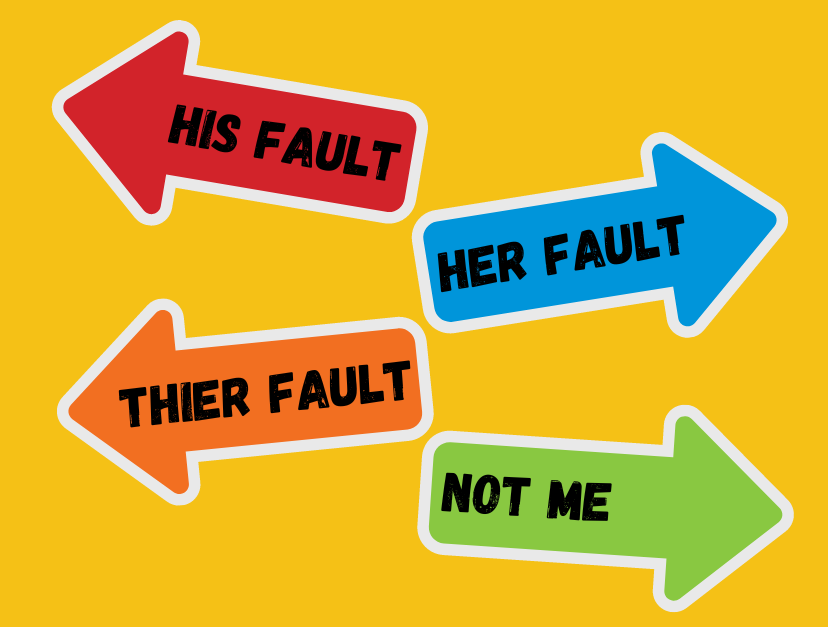
But taking responsibility isn't about physical actions, it's about your attitude. The easiest way to explain it is to look at what you say and do when something goes wrong - and it's your fault.
Let's say you mess up at work. Do you put your hand up to acknowledge you made a mistake, and then do your best to clean up the mess? Do you blame others? Do you take the role of victim? This is a really important part of yourself you need to understand, because successful property developers focus on solutions instead of excuses when problems arise.
And look, I get it. Admitting you made a mistake doesn't always end well. You get your backside kicked, people are annoyed with you. Maybe you even lose your job. There's a lot of reasons to avoid saying you had anything to do with it.
But when you're a Property Developer, the buck stops with you. How the development project is progressing is certainly influenced by the various team members working on the deal, but you're the one pulling all the strings.
As the developer, you need to take responsibility for the results you're getting, good or bad.
And if they're bad, it's even more important for you to take responsibility for the results you're NOT getting. Of the two, this is the one most people fail to own, and where it's easiest to jump into the blame game and make it someone else's fault.
Maybe your project is starting to run overtime. It's easy to sit back and whinge about the builder, complain about how slow he's been, and say that it's all his fault. That's playing the blame game, and seeing yourself as the victim of circumstances.
No. Don't go there. Pick up the phone or go by the site and talk to the builder. Find out what is causing the delays. Apply some pressure by talking about penalties for running over time. See if there's anything you can do to help the builder. There are much more productive things to do other than sitting back and grouching. Strong communication skills are critical during every stage of the property development process.
A lot of people don't like the idea of taking responsibility for things that aren't going right, because we always prefer to think good things about ourselves, rather than accepting we dropped the ball.
But there's a positive side. Taking responsibility means you take control. By accepting your role in whatever is going on, you give yourself the ability to influence what happens next. Which means that if things are currently turning to the proverbial brown stuff, you have the power in your hands to flush it down the toilet and find a more positive way forward. Taking ownership allows property developers to make faster and more effective decisions.
There's another aspect to taking responsibility which is important if you want to take control of the situation and move forward... Ask for help when you're stuck.
MEN - I'm talking to you!!

Maybe it's a stereotype, but men are notorious for wanting to solve things themselves, without asking for help.
Look, I get it. Asking for help can make you feel vulnerable. It feels scary to admit you don't have all the answers. But guess what - it also takes strength to take that onboard and then go ahead and ask anyway.
I am going to add a caveat here though, and say that you need to be careful about who you choose when you're seeking help. Always seek out someone who knows what they're doing and can give you sensible, experienced advice. This doesn't include asking your uncle who works in a legal firm (in the accounts department!) about a complex legal issue at a family BBQ.
If you need to, get referrals from others in the community to find the right person to help you. While your family and friends are probably lovely people, the fact is they're unlikely to know much about property development. Even worse, their primary goal is to protect you, which means any answer they give is more likely to be influenced by their protective instincts than any tangible knowledge they have.
Realistically, this is exactly why the Property Development Network monthly Meetups started. I had been meeting up with a bunch of property developer mates around my kitchen table on a regular basis, where we shared our challenges and got help solving them.
We knew we had more knowledge as a group than we did as individuals, so we took responsibility for getting better at what we were doing by sharing our experiences. As the saying goes, a rising tide lifts all boats. And things grew from there.
If you want guidance from experienced developers while building your skills and confidence, our Property Development Formula course gives you access to mentors, coaching and a supportive development community.
So make the effort to take responsibility for everything that goes on in your property development journey, good and bad, and you'll be a better Property Developer as a result.
In previous articles in this "Killer Traits" series I've talked about a number of different traits I consistently see in successful Property Developers - taking action but not shortcuts, self-motivation and a thirst for knowledge amongst them.
So if you want to become a successful property developer you need both the right skills and the right personality traits. It's as simple as that! Your mindset as a property developer can be just as important as your technical knowledge.
This time around I'm looking at personal responsibility and how that plays into property development. And for all the men out there, there's an aspect of this which is particularly relevant to you!
So read on...
When I use the phrase "taking responsibility" what does that mean to you? A lot of people do responsible things on a day-to-day basis - we work at a job, we pay the bills, we put out the rubbish bin each week. And that's great.
But taking responsibility isn't about physical actions, it's about your attitude. The easiest way to explain it is to look at what you say and do when something goes wrong - and it's your fault.
Let's say you mess up at work. Do you put your hand up to acknowledge you made a mistake, and then do your best to clean up the mess? Do you blame others? Do you take the role of victim? This is a really important part of yourself you need to understand, because successful property developers focus on solutions instead of excuses when problems arise.
And look, I get it. Admitting you made a mistake doesn't always end well. You get your backside kicked, people are annoyed with you. Maybe you even lose your job. There's a lot of reasons to avoid saying you had anything to do with it.
But when you're a Property Developer, the buck stops with you. How the development project is progressing is certainly influenced by the various team members working on the deal, but you're the one pulling all the strings.
As the developer, you need to take responsibility for the results you're getting, good or bad.
And if they're bad, it's even more important for you to take responsibility for the results you're NOT getting. Of the two, this is the one most people fail to own, and where it's easiest to jump into the blame game and make it someone else's fault.
Maybe your project is starting to run overtime. It's easy to sit back and whinge about the builder, complain about how slow he's been, and say that it's all his fault. That's playing the blame game, and seeing yourself as the victim of circumstances.
No. Don't go there. Pick up the phone or go by the site and talk to the builder. Find out what is causing the delays. Apply some pressure by talking about penalties for running over time. See if there's anything you can do to help the builder. There are much more productive things to do other than sitting back and grouching. Strong communication skills are critical during every stage of the property development process.
A lot of people don't like the idea of taking responsibility for things that aren't going right, because we always prefer to think good things about ourselves, rather than accepting we dropped the ball.
But there's a positive side. Taking responsibility means you take control. By accepting your role in whatever is going on, you give yourself the ability to influence what happens next. Which means that if things are currently turning to the proverbial brown stuff, you have the power in your hands to flush it down the toilet and find a more positive way forward. Taking ownership allows property developers to make faster and more effective decisions.
There's another aspect to taking responsibility which is important if you want to take control of the situation and move forward... Ask for help when you're stuck.
MEN - I'm talking to you!!
Maybe it's a stereotype, but men are notorious for wanting to solve things themselves, without asking for help.
Look, I get it. Asking for help can make you feel vulnerable. It feels scary to admit you don't have all the answers. But guess what - it also takes strength to take that onboard and then go ahead and ask anyway.
I am going to add a caveat here though, and say that you need to be careful about who you choose when you're seeking help. Always seek out someone who knows what they're doing and can give you sensible, experienced advice. This doesn't include asking your uncle who works in a legal firm (in the accounts department!) about a complex legal issue at a family BBQ.
If you need to, get referrals from others in the community to find the right person to help you. While your family and friends are probably lovely people, the fact is they're unlikely to know much about property development. Even worse, their primary goal is to protect you, which means any answer they give is more likely to be influenced by their protective instincts than any tangible knowledge they have.
Realistically, this is exactly why the Property Development Network monthly Meetups started. I had been meeting up with a bunch of property developer mates around my kitchen table on a regular basis, where we shared our challenges and got help solving them.
We knew we had more knowledge as a group than we did as individuals, so we took responsibility for getting better at what we were doing by sharing our experiences. As the saying goes, a rising tide lifts all boats. And things grew from there.
If you want guidance from experienced developers while building your skills and confidence, our Property Development Formula course gives you access to mentors, coaching and a supportive development community.
So make the effort to take responsibility for everything that goes on in your property development journey, good and bad, and you'll be a better Property Developer as a result.