

Buying a development site is not just about finding a block of land with a “for sale” sign and a price tag. It’s about identifying a site that can work financially, legally, and practically for the kind of project you want to build.
The difference between a profitable project and a financial headache often comes down to what you don’t see or check before buying the site.
So let's take a look at some of the more common "gotchas" you should be looking for when inspecting a potential development site.
First up, I know some people will buy a site without visiting it in person. While the digital world is amazing, I still strongly suggest you physically inspect the site during the due diligence period.
The reality is, a glossy listing or aerial photo can hide many costly surprises. Certainly it's worth eliminating as many dud sites as you can with digital tools, but if you're serious about buying a particular property, a site inspection allows you to see what the zoning maps, development apps and agent’s spiel can’t show you.
Bottom line, hidden gotchas can blow out budgets, stall approvals, and, in the worst cases, make a project unviable. It's far better to find them and exit before you've committed hard cash to the project.
First Question
When you're assessing the site, you should already know whether you can, should or must demolish the existing house, as this affects what you're looking at.
I've covered this in an earlier Property Pulse "Should It Stay Or Should It Go". For starters, does the house have any intrinsic value? Or heritage protection?
If you're going to be keeping the house, then a couple of things you need to add to the gotchas list are whether there's sufficient side access available and the condition of the current house.
Having said that, I'm going to focus the rest of this article on "gotchas" when you're looking at the site for development, as these apply whether the house stays or not.
Google Street View
While visiting in person is still the goal, you can certainly check a lot of gotchas using Google Street View or something similar.
What can you see out the front of the property, in terms of service pits, nature strip trees, bus stops, etc? While none of these are necessarily a show-stopper, if they're located where you'll need to put a driveway it's a different story that's likely to cost serious dollars if you want to change the ending.
You can also check what type of trees are on the property and next door that might affect your plans.
 Topography
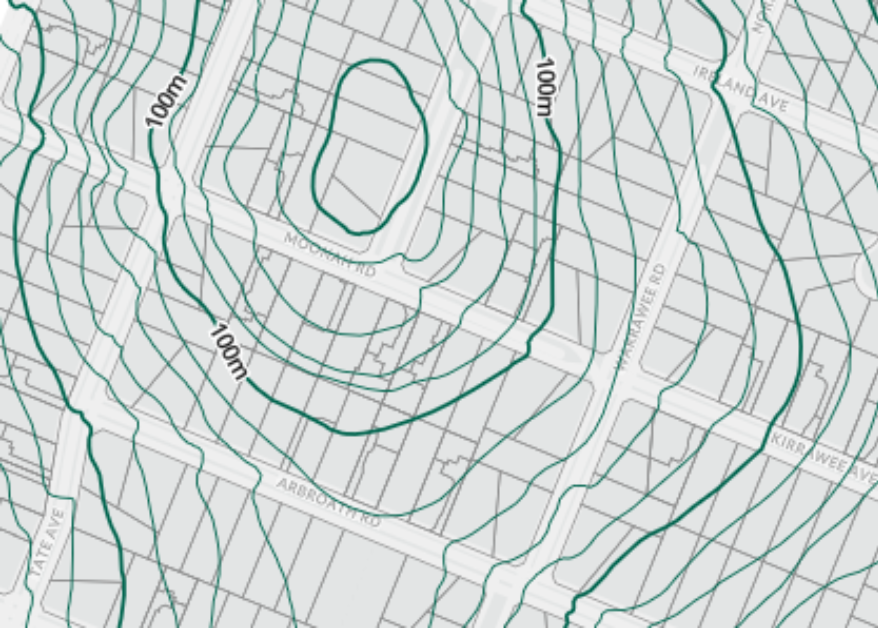
Looking at a site from above, it's not always possible to see if it slopes. If you have an app that displays contour lines, use it! If not, check it out in person.
Slope is a huge factor when developing a site. It's great if it's sloping the right way for connecting services, but if it's not, that's a big gotcha.
Slope also affects development costs. For more details on what to consider when it comes to slope, check out this article: When Is The Slope On A Site Too Steep?
Before You Dig
The Before You Dig app is an absolute must when it comes to uncovering gotchas. You can find out where all the services are located, and if they're located in easements on the site.
Easements can make a huge difference to what you can do with a site, given you generally can't build over them. They don’t just reduce your usable land, they can dictate your entire design.
I'd also highly recommend you double check what you see on the utility plans with the reality on site during your due diligence. Countless developers have learnt to their cost that the two aren't always the same, and you don't want to be the one who ends up with a sewer full of concrete.
Site Dimensions
There are plenty of tools that can tell you the dimensions of a site, and in particular, the frontage. Being an Area Expert, you'll know if you can do the development you're planning based on the measurements.
If you're in the due diligence period for a project then I'd highly recommend getting a survey done on the property. But if you're still in the early stages, going to site is a great opportunity to at least step out the frontage to make sure it's roughly right.
And if you can find the closest survey point, you might also be able to step out whether the property is in roughly the right location. Don't laugh! You'd be surprised how often things like fences are in the wrong place, let alone the site itself. Still get it checked by a professional during due diligence though.
Zoning & Overlays
Hopefully you know enough to check the zoning your site is in and have verified you can do whatever it is you're planning to do under that zone's regulations.
But have you checked for overlays? Many of them are mostly harmless, but some are big gotchas.
Flood zones, for example, can make a huge difference to what you're planning to do. Be aware that many of these are being updated moving forward, so don't assume that a flood overlay you checked for the property next door a year ago is the same today.
Heritage and character overlays can also have a sting in the tail. You might buy a site intending to knock down the existing dwelling, only to find demolition is prohibited or approval is nearly impossible. You might be forced into an expensive and less profitable “sympathetic” renovation instead.
 Doing The Numbers
Not getting the numbers right is probably one of the biggest gotchas of them all. All of the above gotchas matter (and believe me, those I've listed are just the tip of the iceberg!). Maybe if there's only one, you can absorb the extra costs into your numbers and still get a decent profit.
But when you have a series of gotchas on your site, suddenly they add up and make your numbers look very sad indeed. The bargain you thought you'd found suddenly starts looking extremely expensive.
You also need to check sales data for the end product you want to create. That's not pie in the sky numbers - that's real sales of comparable product in the same area.
Visiting The Site
I've already suggested a few times that visiting the site is a good idea, but mostly that was to double check information you can generally find online. However there are definitely some things that researching online will never uncover.
Why? Because sometimes the biggest risk to your development is not on your site, but next door. Or at least down the street.
So stand on the site and use your senses. Is there constant traffic noise, factory hum, or aircraft overhead? Are there any smells from nearby waste facilities, farms, or commercial kitchens?
Also check for signs of past land use that may have resulted in contaminated soil, such as old fuel stations, industrial sites, or market gardens. If there is, it may need environmental remediation.
Remember, what you hear and smell now could be what your future buyers or tenants experience. I also highly recommend you visit the site at different times of the day and week to experience the environment.
Look, I could continue on for a lot longer as there's almost as many gotchas as there are sites. Unfortunately development site gotchas are often invisible to inexperienced eyes, and even seasoned developers can get caught out if they rush the due diligence process. The common thread among these pitfalls is they’re far cheaper to identify before you buy (and potentially walk away) than to fix afterwards.
The best defence is a disciplined, multi-layered approach to due diligence:
In property development, the numbers only stack up if reality matches your assumptions. By knowing the gotchas and actively hunting for them, you protect your margins and increase your chances of delivering a profitable, stress-free project.
The difference between a profitable project and a financial headache often comes down to what you don’t see or check before buying the site.
So let's take a look at some of the more common "gotchas" you should be looking for when inspecting a potential development site.
First up, I know some people will buy a site without visiting it in person. While the digital world is amazing, I still strongly suggest you physically inspect the site during the due diligence period.
The reality is, a glossy listing or aerial photo can hide many costly surprises. Certainly it's worth eliminating as many dud sites as you can with digital tools, but if you're serious about buying a particular property, a site inspection allows you to see what the zoning maps, development apps and agent’s spiel can’t show you.
Bottom line, hidden gotchas can blow out budgets, stall approvals, and, in the worst cases, make a project unviable. It's far better to find them and exit before you've committed hard cash to the project.
First Question
When you're assessing the site, you should already know whether you can, should or must demolish the existing house, as this affects what you're looking at.
I've covered this in an earlier Property Pulse "Should It Stay Or Should It Go". For starters, does the house have any intrinsic value? Or heritage protection?
If you're going to be keeping the house, then a couple of things you need to add to the gotchas list are whether there's sufficient side access available and the condition of the current house.
Having said that, I'm going to focus the rest of this article on "gotchas" when you're looking at the site for development, as these apply whether the house stays or not.
Google Street View
While visiting in person is still the goal, you can certainly check a lot of gotchas using Google Street View or something similar.
What can you see out the front of the property, in terms of service pits, nature strip trees, bus stops, etc? While none of these are necessarily a show-stopper, if they're located where you'll need to put a driveway it's a different story that's likely to cost serious dollars if you want to change the ending.
You can also check what type of trees are on the property and next door that might affect your plans.
TopographyLooking at a site from above, it's not always possible to see if it slopes. If you have an app that displays contour lines, use it! If not, check it out in person.
Slope is a huge factor when developing a site. It's great if it's sloping the right way for connecting services, but if it's not, that's a big gotcha.
Slope also affects development costs. For more details on what to consider when it comes to slope, check out this article: When Is The Slope On A Site Too Steep?
Before You Dig
The Before You Dig app is an absolute must when it comes to uncovering gotchas. You can find out where all the services are located, and if they're located in easements on the site.
Easements can make a huge difference to what you can do with a site, given you generally can't build over them. They don’t just reduce your usable land, they can dictate your entire design.
I'd also highly recommend you double check what you see on the utility plans with the reality on site during your due diligence. Countless developers have learnt to their cost that the two aren't always the same, and you don't want to be the one who ends up with a sewer full of concrete.
Site Dimensions
There are plenty of tools that can tell you the dimensions of a site, and in particular, the frontage. Being an Area Expert, you'll know if you can do the development you're planning based on the measurements.
If you're in the due diligence period for a project then I'd highly recommend getting a survey done on the property. But if you're still in the early stages, going to site is a great opportunity to at least step out the frontage to make sure it's roughly right.
And if you can find the closest survey point, you might also be able to step out whether the property is in roughly the right location. Don't laugh! You'd be surprised how often things like fences are in the wrong place, let alone the site itself. Still get it checked by a professional during due diligence though.
Zoning & Overlays
Hopefully you know enough to check the zoning your site is in and have verified you can do whatever it is you're planning to do under that zone's regulations.
But have you checked for overlays? Many of them are mostly harmless, but some are big gotchas.
Flood zones, for example, can make a huge difference to what you're planning to do. Be aware that many of these are being updated moving forward, so don't assume that a flood overlay you checked for the property next door a year ago is the same today.
Heritage and character overlays can also have a sting in the tail. You might buy a site intending to knock down the existing dwelling, only to find demolition is prohibited or approval is nearly impossible. You might be forced into an expensive and less profitable “sympathetic” renovation instead.
Doing The NumbersNot getting the numbers right is probably one of the biggest gotchas of them all. All of the above gotchas matter (and believe me, those I've listed are just the tip of the iceberg!). Maybe if there's only one, you can absorb the extra costs into your numbers and still get a decent profit.
But when you have a series of gotchas on your site, suddenly they add up and make your numbers look very sad indeed. The bargain you thought you'd found suddenly starts looking extremely expensive.
You also need to check sales data for the end product you want to create. That's not pie in the sky numbers - that's real sales of comparable product in the same area.
Visiting The Site
I've already suggested a few times that visiting the site is a good idea, but mostly that was to double check information you can generally find online. However there are definitely some things that researching online will never uncover.
Why? Because sometimes the biggest risk to your development is not on your site, but next door. Or at least down the street.
So stand on the site and use your senses. Is there constant traffic noise, factory hum, or aircraft overhead? Are there any smells from nearby waste facilities, farms, or commercial kitchens?
Also check for signs of past land use that may have resulted in contaminated soil, such as old fuel stations, industrial sites, or market gardens. If there is, it may need environmental remediation.
Remember, what you hear and smell now could be what your future buyers or tenants experience. I also highly recommend you visit the site at different times of the day and week to experience the environment.
Look, I could continue on for a lot longer as there's almost as many gotchas as there are sites. Unfortunately development site gotchas are often invisible to inexperienced eyes, and even seasoned developers can get caught out if they rush the due diligence process. The common thread among these pitfalls is they’re far cheaper to identify before you buy (and potentially walk away) than to fix afterwards.
The best defence is a disciplined, multi-layered approach to due diligence:
- Online review - top level due diligence to discard sites with gotchas
- Physical inspection – to spot practical and environmental issues
- Document review – to uncover legal and planning constraints
- Specialist advice – from planners, engineers, and lawyers who understand development risks
In property development, the numbers only stack up if reality matches your assumptions. By knowing the gotchas and actively hunting for them, you protect your margins and increase your chances of delivering a profitable, stress-free project.