
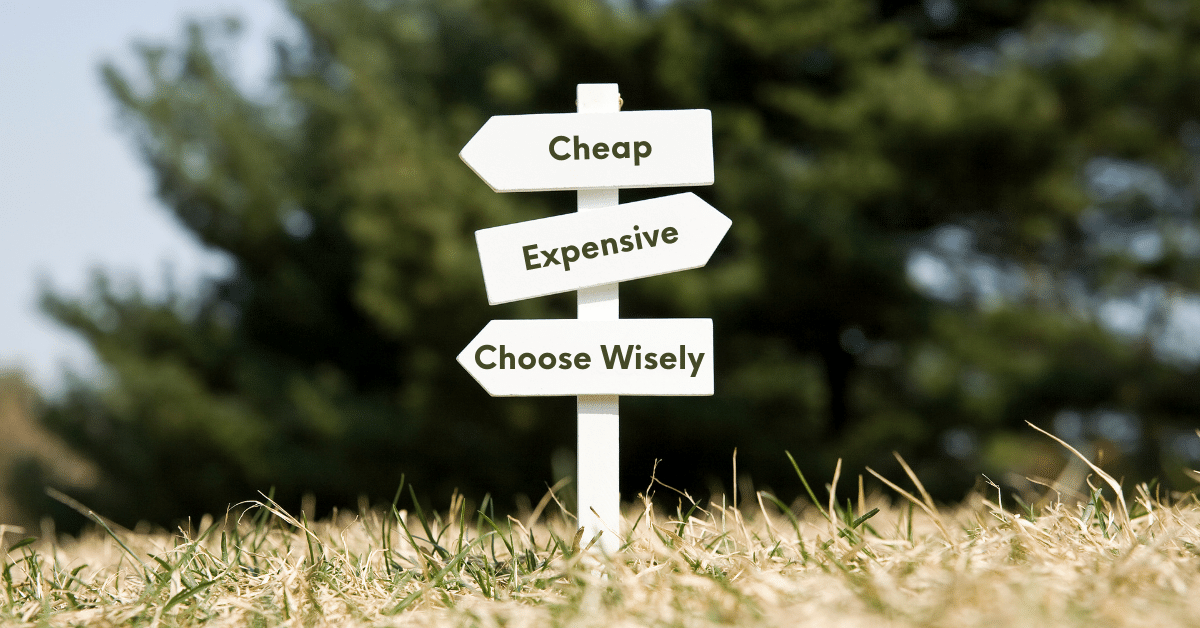
It's generally accepted within our society that the more expensive something is, the better quality it will be. Having said that, most people have had the experience of paying top dollar for an item only to realise it's not necessarily true!
When it comes to buying property, there are a lot more factors at play. Naturally, one of those factors is the price you pay for the property. But as I've often said, you only lose money by going into the wrong deal. Understanding property development deal analysis is far more important than simply focusing on price.
So let's take a look at some of those factors, and answer the question of whether property developing sticks to the "rule" of more expensive is better.
It's a Duck
First up, let's apply the "duck test". If it looks like a duck, swims like a duck, and quacks like a duck, then it probably is a duck.
This is true in property development. A lot of the tasks required in the process of developing a property are the same regardless of which suburb it's in. Costs may vary a bit depending on the type of development, price point and finish quality, but you're still going to pay them. Core property development costs remain consistent across different markets.
Things like:

So regardless of how much you paid for the property, you bought a duck. Now, you might have bought a common domestic duck whereas someone else bought a rare Swedish Blue duck, but they're still both ducks. This is where the big point of difference comes in though. Depending on the breed of duck, your approach in raising them is likely to be different.
It's All About Profit
At its most basic level, sales minus costs equals profits. That's it. You only make money if you sell the end product of the development for more than it cost you to produce. This is the foundation of property development feasibility and profit calculation.
In a cheap suburb, because the costs I listed above still apply, volume is your friend. Small developments, such as 1 into 2, are much less likely to work in a cheap suburb because the other costs eat up all the sales value and more. In an expensive suburb, though, the sales price at the end is much higher, and so it's easier to make a profit on a small development.
Sure, a small development in an expensive suburb will cost more to build, mostly because you'll need to have much higher quality fixtures and fittings amongst other things. This is where being an area expert becomes so important. You have to know what's going to sell for top dollar and that's what you provide. Matching products to market demand is a key part of successful property development strategy.
 And while I've been talking about developments where you end up with dwellings, the same is true for land subdivisions as well. In a cheap suburb you will still sell the smallest possible lots the Council will let you create, because they're affordable. In an expensive suburb, though, if the end buyers are wanting a bigger lot so they can fit their massive McMansion on it, you need to plan your subdivision to suit.
In other words, if you're breeding domestic ducks it's all about volume. Sell lots of them and make a small profit on each one, which then overall gives you a big profit. With your Swedish Blues you might raise them in air-conditioned comfort, groom them daily and feed them premium food, but in the end you only need to sell a couple to make a big profit.
Either way, you house the ducks, feed them, keep them healthy and at the end you sell them. You just tailor those activities to suit which end of the market you're operating in.
Psychology
So if getting educated means you have the tools to suit your property developing to whichever end of the market you're developing in, then the question needs to change. It's not about which is "better" - it's about which is better FOR YOU. Choosing the right property development strategy depends on your personal situation, resources and mindset.
One of the most common reasons for looking in cheaper suburbs for a development site is that people look at their own resources and decide they can't afford a higher price point. My approach is that you should develop in the most expensive suburb you can comfortably afford.
Now, you might think the words "comfortably afford" are referring to your own financial situation dictating what you can afford. But I actually think the word "comfortably" is more important, and it's about your mindset.
Because if you look through all the information I share, you'll soon see that I spend a lot of time talking about how to do deals in ways that require very little in the way of your own financial resources. Joint ventures, long settlements and options are a few of them. But taking on a deal that requires you to link up with other people is hugely uncomfortable for many people. That's where psychology comes into it.
Inside the Property Development Formula, we teach how to structure deals, assess feasibility and choose the right strategy so you can confidently move beyond price and focus on value.
Flowing on from that, fear of losing money is another big reason new developers steer towards cheaper suburbs. Fear of losing someone else's money is often even bigger, which is why so few new property developers feel comfortable with joint ventures.
And look, I'm not going to deny that if you're starting out, there's probably some justification in trying to start with a cheaper deal while you're learning, so that if you do make lots of mistakes and the profit disappears down the plug hole, hopefully the loss you're left with is manageably small. There's a lot to be said for the idea of fail fast, fail safely, fail early.
But it's also important to remember that failure is not fatal, and failure is not final. So if you're finding that the best deals are in areas outside your own financial capabilities, then maybe consider that as well as bringing in a finance partner, you also need someone with experience involved in the deal, or perhaps a project manager to run the deal, and accept that feeling comfortable might just mean a little less profit for you at the end. Building the right team is essential for managing property development risk.
After all, at the risk of confusing you with all this talk of animals, how do you eat an elephant? One bite at a time. Maybe with your first meal or two you need to eat a little less in order to get comfortable with the process of how to eat an elephant, but once you've got that experience, then trust the process and you can eat as much as you want - regardless of how much the elephant cost you in the first place. Just make sure it's a good one.
When it comes to buying property, there are a lot more factors at play. Naturally, one of those factors is the price you pay for the property. But as I've often said, you only lose money by going into the wrong deal. Understanding property development deal analysis is far more important than simply focusing on price.
So let's take a look at some of those factors, and answer the question of whether property developing sticks to the "rule" of more expensive is better.
It's a Duck
First up, let's apply the "duck test". If it looks like a duck, swims like a duck, and quacks like a duck, then it probably is a duck.
This is true in property development. A lot of the tasks required in the process of developing a property are the same regardless of which suburb it's in. Costs may vary a bit depending on the type of development, price point and finish quality, but you're still going to pay them. Core property development costs remain consistent across different markets.
Things like:
- getting the Development Approval
- council fees
- civil works on the property
- building works on the property
So regardless of how much you paid for the property, you bought a duck. Now, you might have bought a common domestic duck whereas someone else bought a rare Swedish Blue duck, but they're still both ducks. This is where the big point of difference comes in though. Depending on the breed of duck, your approach in raising them is likely to be different.
It's All About Profit
At its most basic level, sales minus costs equals profits. That's it. You only make money if you sell the end product of the development for more than it cost you to produce. This is the foundation of property development feasibility and profit calculation.
In a cheap suburb, because the costs I listed above still apply, volume is your friend. Small developments, such as 1 into 2, are much less likely to work in a cheap suburb because the other costs eat up all the sales value and more. In an expensive suburb, though, the sales price at the end is much higher, and so it's easier to make a profit on a small development.
Sure, a small development in an expensive suburb will cost more to build, mostly because you'll need to have much higher quality fixtures and fittings amongst other things. This is where being an area expert becomes so important. You have to know what's going to sell for top dollar and that's what you provide. Matching products to market demand is a key part of successful property development strategy.
And while I've been talking about developments where you end up with dwellings, the same is true for land subdivisions as well. In a cheap suburb you will still sell the smallest possible lots the Council will let you create, because they're affordable. In an expensive suburb, though, if the end buyers are wanting a bigger lot so they can fit their massive McMansion on it, you need to plan your subdivision to suit.In other words, if you're breeding domestic ducks it's all about volume. Sell lots of them and make a small profit on each one, which then overall gives you a big profit. With your Swedish Blues you might raise them in air-conditioned comfort, groom them daily and feed them premium food, but in the end you only need to sell a couple to make a big profit.
Either way, you house the ducks, feed them, keep them healthy and at the end you sell them. You just tailor those activities to suit which end of the market you're operating in.
Psychology
So if getting educated means you have the tools to suit your property developing to whichever end of the market you're developing in, then the question needs to change. It's not about which is "better" - it's about which is better FOR YOU. Choosing the right property development strategy depends on your personal situation, resources and mindset.
One of the most common reasons for looking in cheaper suburbs for a development site is that people look at their own resources and decide they can't afford a higher price point. My approach is that you should develop in the most expensive suburb you can comfortably afford.
Now, you might think the words "comfortably afford" are referring to your own financial situation dictating what you can afford. But I actually think the word "comfortably" is more important, and it's about your mindset.
Because if you look through all the information I share, you'll soon see that I spend a lot of time talking about how to do deals in ways that require very little in the way of your own financial resources. Joint ventures, long settlements and options are a few of them. But taking on a deal that requires you to link up with other people is hugely uncomfortable for many people. That's where psychology comes into it.
Inside the Property Development Formula, we teach how to structure deals, assess feasibility and choose the right strategy so you can confidently move beyond price and focus on value.
Flowing on from that, fear of losing money is another big reason new developers steer towards cheaper suburbs. Fear of losing someone else's money is often even bigger, which is why so few new property developers feel comfortable with joint ventures.
And look, I'm not going to deny that if you're starting out, there's probably some justification in trying to start with a cheaper deal while you're learning, so that if you do make lots of mistakes and the profit disappears down the plug hole, hopefully the loss you're left with is manageably small. There's a lot to be said for the idea of fail fast, fail safely, fail early.
But it's also important to remember that failure is not fatal, and failure is not final. So if you're finding that the best deals are in areas outside your own financial capabilities, then maybe consider that as well as bringing in a finance partner, you also need someone with experience involved in the deal, or perhaps a project manager to run the deal, and accept that feeling comfortable might just mean a little less profit for you at the end. Building the right team is essential for managing property development risk.
After all, at the risk of confusing you with all this talk of animals, how do you eat an elephant? One bite at a time. Maybe with your first meal or two you need to eat a little less in order to get comfortable with the process of how to eat an elephant, but once you've got that experience, then trust the process and you can eat as much as you want - regardless of how much the elephant cost you in the first place. Just make sure it's a good one.